Showing posts with label wool. Show all posts

Wednesday, 27 July 2016

Farewell Tilburg

Farewell Tilburg

I have packed in so much into the time here, yet would happily stay longer to unearth more about the history of the place and the impact that that has on the success of the museum and the venture of the Lab. Tilburg has similarities with some of our smaller Yorkshire mill towns and Luton and its hatting as the industry was composed of 150 SME’s just 40 larger companies and in its hey day employed 15,000 workers, producing 65% of the wool production in The Netherlands.

Tilburg has no notable industry left socio geographers would see this as Phantom industry in having no direct economic industry but social scars from the past. The museum has become a small catalyst for social regeneration. All the members that I met at the museum were highly positive and saw this as a great opportunity to create new opportunities and tell the story of the textiles industry which had formed the town. The Tilburg model could be another way to do this with the appropriate regional and national support and collaborative structure between artisans, academia and museums.

I first heard of Tilburg from Eugenie van Oirschot, a milliner from The Netherlands, when I attended a workshop with her in Edinburgh. She spoke with such zeal about what the museum and textile lab achieved for designers and the artisan community that I wrote it down in my wish list. To have finally visited and had the opportunity to see it in action thanks to the Winston Churchill Fellowship I understand that passion. The museum is a definite catalyst for change in the community and the region, thanks to its inspirational vision and a team who work together to inspire and aspire to new textiles futures.

Sunday, 17 July 2016

Catching Up,,,,,,,,

Catching Up ------

I had promised myself to write daily and be diligent in capturing my thoughts from each experience. I have done so in my trusty moleskin notebook but not so in this blog. A day in archives and collections is more energy sapping than one expects.....such a poor excuse.
Back to Tilburg so many days and experiences ago now.


Gallery 1 – Textiel Lab
one of the small looms
Walking into the space the first time totally lifted my heart (bit extreme I know for blog writing!) Here laid out within a museum setting was exactly what I had aspired to within Hat Works and within the textile museums in Yorkshire. Textiles, artisanship, design and manufacture totally alive and well and moving forward. Not ignoring the past but aware of the history and skills and breathing in new life with sound commercial underpinning and an awareness of market needs.

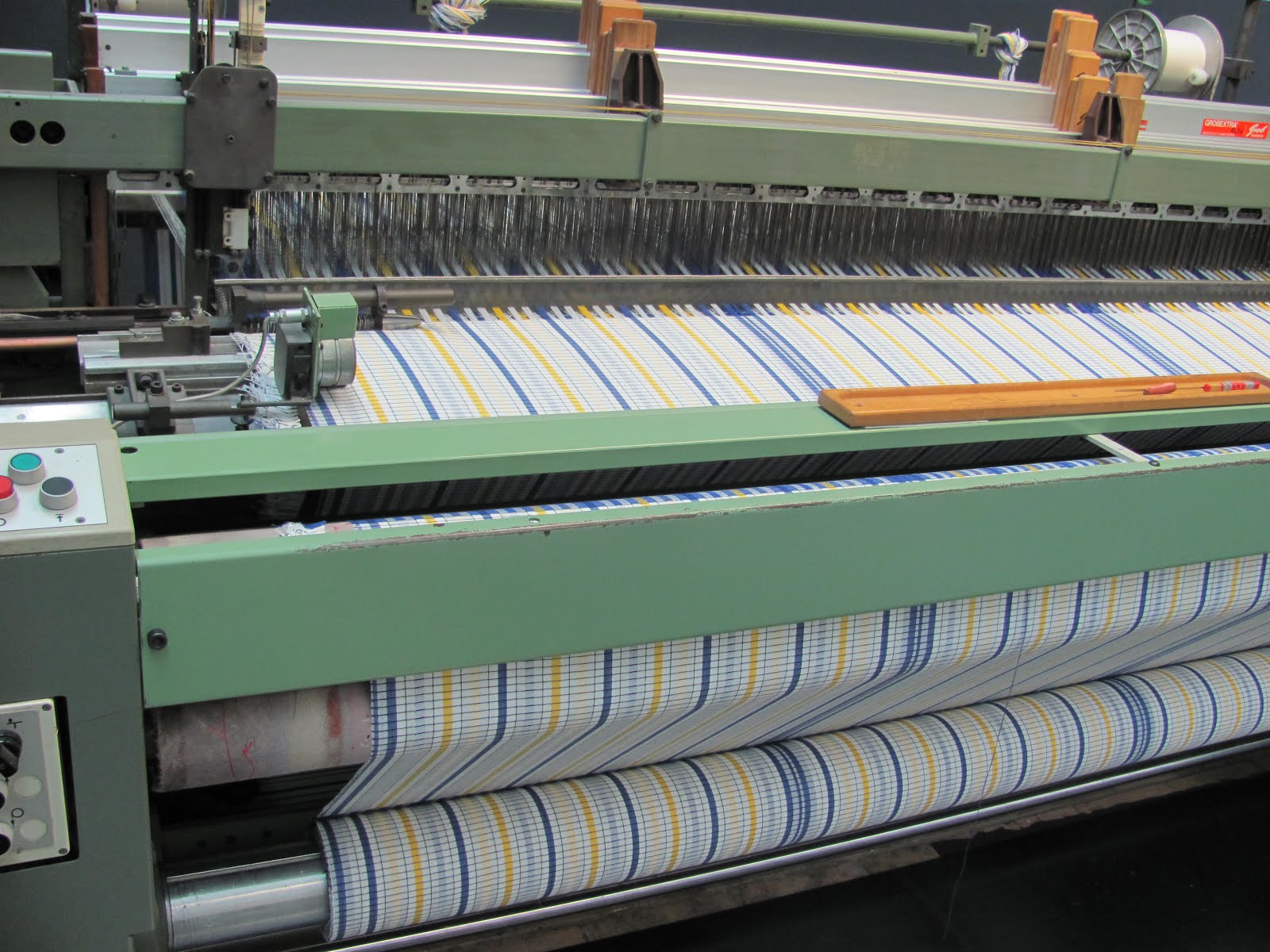
Within the lab area is a design hub where meetings can be held and the managers of the space work. A weaving hub with a range of new high quality looms, the Lab work with Dornier Jacquard Loom company who appreciate and welcome the unique synergy between atelier and museum in leading to new textiles. Including 3 jacquard looms, 2 plain looms, one similar to the Yorkshire Hattersley, but powered by a static bike, which visitors can ride on and weave cloth. The jacquard card puncher was a particularly beautiful thing.
The looms were quietly humming away. On my first visit one was weaving cloth to be sold in shop as table linen, another was having its warp set up and I saw the magic created the following day by Belgium artist Otobong Nkanga. She is based in Antwerp and has worked with the lab since 2010 working with the skills of the team to realise her artistic ideas. The piece she was developing was based on topographical photographs and through the use of browns, golds and blacks on the jacquard she had created the first layers of her three dimensional landscape. I was fortunate to share the moment when her cloth was cut from the loom and cascaded onto the floor by Stef the Manager. Such an experience is one that brings a museum visit to life and creates such memories. All the techncians were working on projects at the different machines but all were happy to talk and answer questions .To be so close to a moving loom raises ranges of Health & Safety queries yet these seem to be manageable and increase the sense of belonging and being allowed to be within the space as a visitor.


Other areas in the lab included a machine embroidery area with a Brother and SWC machines. I spoke with the technician who was completing a commission for a British artist embroidering symbols onto ikat cloth. The handwoven ikat had taken a year to produce to the artist’s design then the lab was completing the work. Such a project is a big part of the lab’s work and generates important incomes.


Friday, 8 July 2016

Gallery 2 - The Machine Floor

The Story of Wool Cloth Production
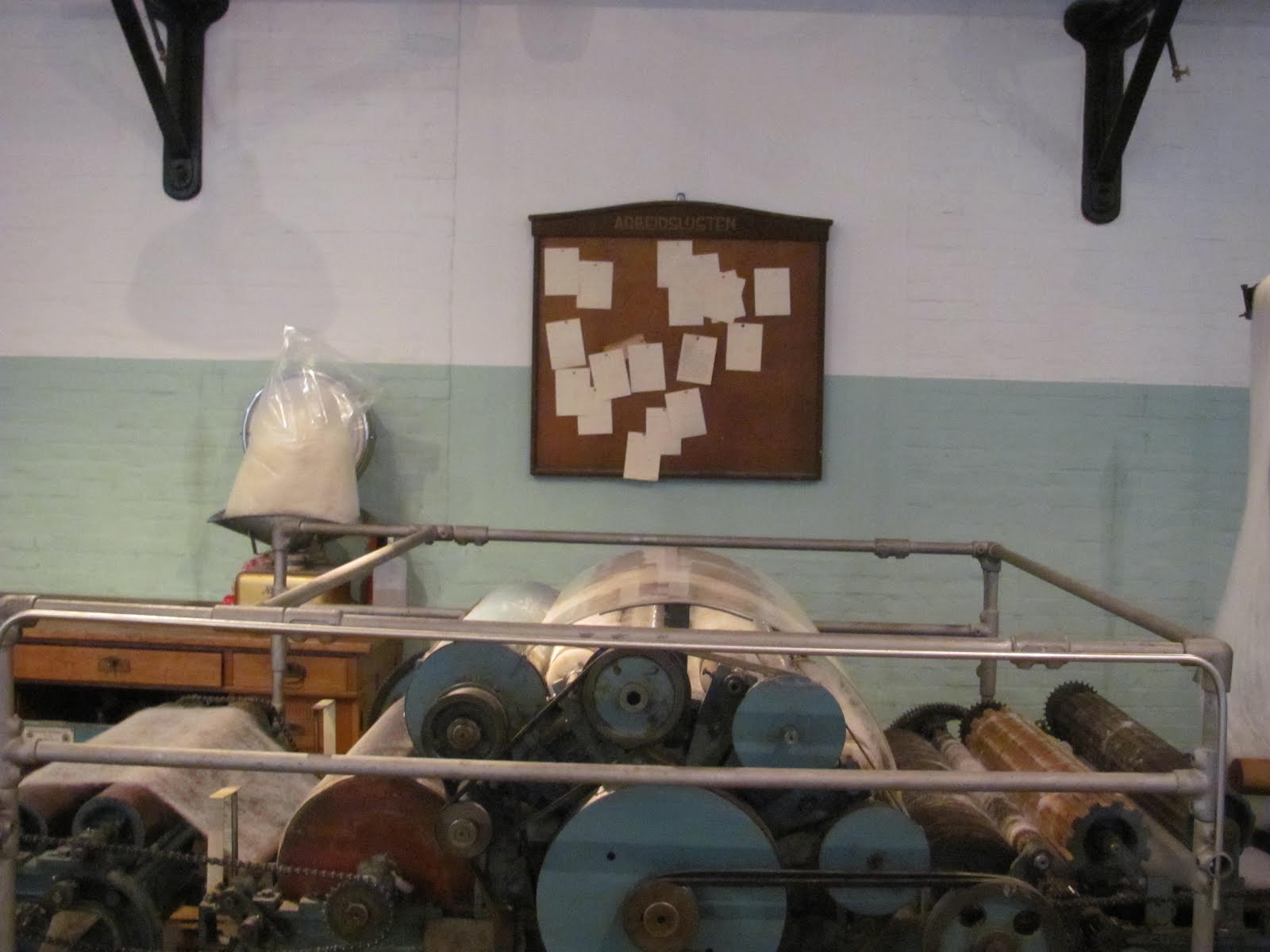
From elements of previous work and projects the machinery around wool and worsted manufacture is a known commodity that I am fascinated by. Though I am not always certain as to what it all does and love to see it working to further educate and inform me. The display at the Textiel Museum is well laid out and accessible to those with some knowledge and no knowledge. On the two days that I visited the gallery there were several attendants on hand to share knowledge and work the machinery, which brought the story to life further. They were incredibly engaging and enthusiastic and were happy to share stories and answer questions. The signage throughout the exhibition was also highly appropriate with archive photographs, machinery knowledge and dates and where the machines came from. It was all highly illuminating in creating a working, contemporary and engaging museum narrative through display, volunteers, examples and signage.

The exhibition space begins with large sacks of beautifully clean wool tops that the visitor can touch and gain a sense of the materials used. Museum information is in a clip board style which I felt was really user friendly and not over facing. The historic pictures add to the scene. I did wonder whether there was a need for more such pictures but they could be elsewhere for visitors who are more interested in the history. There was a real sense of placing the story locally in Tilburg.

Wool sack and exhibition signage
The Devil's Mill

The 'Duvel Molen' Devil's Mill described the picking shed where all the wool was sorted to the desired blend before being dyed or spun. Back breaking work and highly dangerous.
Back of the Devils Mill and those scary teeth

the clocking in machine I did wonder if the workers of Tilburg were shut out from the factory gates if a minute late as the Yorkshire Mill workers were.


Wednesday, 6 July 2016

Heterotopia - the place for otherness

Museums as places for otherness

I took this reference from the book Fifty Years of the Textile Museum 1958-2008,   I consider that it very much sums up how I feel about museums and galleries. They are places for new ideas to be generated from past collections and stories. They can create humility giving us a new sense of place and time. The opportunity to see items that if it weren't for museums and archives we would lose.

The Textile Museum is striving to be a place of openness and freedom but within that the visitor and researcher needs security. Hence the notion of heterotopia. Somewhere that sits between public and private. Open to collaboration, new ideas, and sharing the production of textiles in the past, present and importantly future.

This was very apparent walking around the mill floor. Seeing the old looms that still work and tell the story of production then moving through the door and seeing the Textiel Lab in operation. New looms doing the same job as old. New designers working effectively with technicians to test ideas and create new work. Inspirational.