Showing posts with label Nederlands. Show all posts

Wednesday, 27 July 2016

On to Antwerp

On to Antwerp

Having already passed through Antwerp from Brussels to Tilburg  and the brutalist architecture of the station I was intrigued to see more. The earlier train proved to be the slow train passing through every village and town. As I found out later the Antwerp sales which always begin each year on July 1st are a big pull for the inhabitants of the Netherlands. It was a busy station. Intriguing with the vote that we just had in the UK that this ease of movement will be lost. This neighborliness and collaborative spirit.
Antwerp station is phenomenal coming out of the depths of three floors down up into the grandeur of gold and carved stonework, stations of old, promising adventure and excitement. The hotel was only 5 minutes walk away. Stations may occasionally need better sign posts or I need to map read better. The jaunt through the slightly scrubby streets to the west of the station didn’t promise greatness, hotel found, wonderful staff and a room of peace and quiet, the next part of the adventure could begin.


I was in Antwerp to explore MOMU the fashion museum. The challenge was that none of my correspondence had been replied to. So a Saturday afternoon jaunt into the centre to get my bearings and work out where MOMU was and whether there was another way to connect. Quite nerve wracking and angst creating thinking how would I build the research without a contact. Thoughts that I could just commute back to Tilburg if it really didn’t happen but not ideal.


I have never visited Belgium prior to this trip and was intrigued to explore and gain a sense of place and people. Antwerp felt safe, engaging, open and accessible. There is a sense of wealth with an exceptional range of shops and places to eat yet a society that works as a society. The first afternoon boded well for the week ahead whatever happen.

MOMU entrance
Antwerp skyline

Farewell Tilburg

Farewell Tilburg

I have packed in so much into the time here, yet would happily stay longer to unearth more about the history of the place and the impact that that has on the success of the museum and the venture of the Lab. Tilburg has similarities with some of our smaller Yorkshire mill towns and Luton and its hatting as the industry was composed of 150 SME’s just 40 larger companies and in its hey day employed 15,000 workers, producing 65% of the wool production in The Netherlands.

Tilburg has no notable industry left socio geographers would see this as Phantom industry in having no direct economic industry but social scars from the past. The museum has become a small catalyst for social regeneration. All the members that I met at the museum were highly positive and saw this as a great opportunity to create new opportunities and tell the story of the textiles industry which had formed the town. The Tilburg model could be another way to do this with the appropriate regional and national support and collaborative structure between artisans, academia and museums.

I first heard of Tilburg from Eugenie van Oirschot, a milliner from The Netherlands, when I attended a workshop with her in Edinburgh. She spoke with such zeal about what the museum and textile lab achieved for designers and the artisan community that I wrote it down in my wish list. To have finally visited and had the opportunity to see it in action thanks to the Winston Churchill Fellowship I understand that passion. The museum is a definite catalyst for change in the community and the region, thanks to its inspirational vision and a team who work together to inspire and aspire to new textiles futures.

Thursday, 21 July 2016

The Damask Shed

The Damask Shed

A trip through the gift shop

I nearly missed this gallery space and I wonder if others would too, which would be a shame as the space is beautiful and the light falling onto the looms enhances this. The Gallery tells the story of damask weaving. As with the other spaces beautifully crafted and aesthetically well designed the visitor is drawn through the museum. I had definite bench envy where the film showing the process was. Great film too. Then a more traditional museum casing explored the livery of the Ocean liners, their cutlery, crockery and the damask. A golden age.


Finally the loom shed showing the difference in the fine linen weaving and a shelf unit stacked upon stacked with pattern weaving cards. Things of beauty. Narrative tellers, opportunities, new inspiration.


The Museum Shop.....

The Shop

You can always tell the quality of a museum by its shop and café.......Discuss?


The joys or not of the obvious commercial spaces of a museum. Often the last port of call in any visit and the one that can leave the most pertinent memory. The space in the Textiel Museum is beautifully laid out and as with the rest of the museum is to a high quality specification in display. The pieces for sale reflect what one has seen within the rest of the museum. Here is your opportunity to buy the Viktor & Rolf designed jacquard dishcloth with graffiti splurge or a table cloth designed by Droog. This was interspersed with a strong collection of jewellery made by Nederlands designers, felt and wool pieces and I even found a Margo Selby scarf. The space and the staff were all very welcoming and there were pieces for all price points. Good thing that I came with a full suitcase... lots of lovely new books I would have liked and some gorgeous textiles.


Margo Selby scarf

Gallery 4 - Design Challenges

Gallery 4


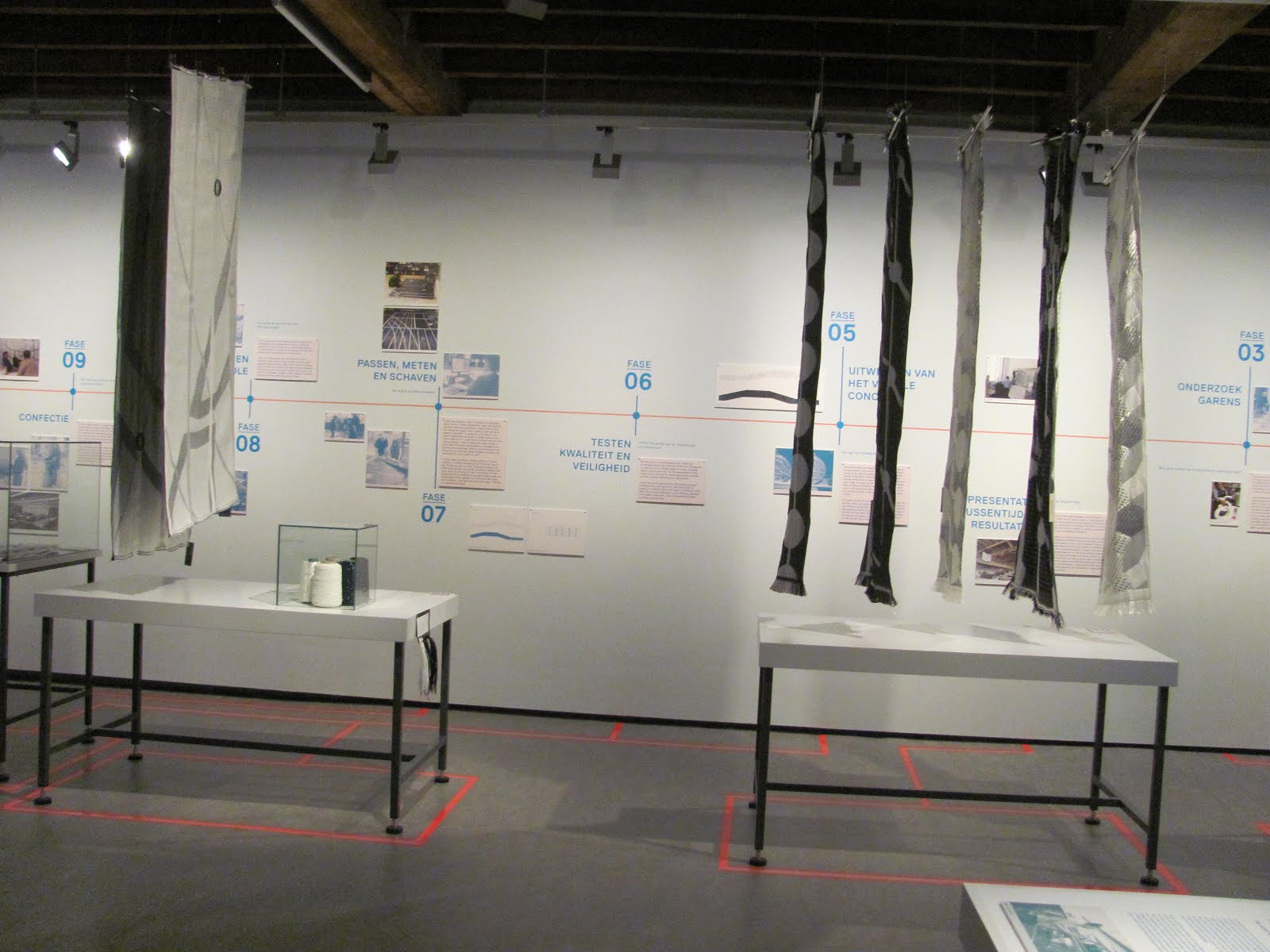
The transition from accomplished highly professional textile pieces developed through commissions  into a sampling and trial space was informed and innovative curation.  Gallery 4’s exhibition  examined the processes of the project ‘solar curtains’, a design commission from Qatar. The Gallery was laid out as small studio areas and displayed the range of yarns experimented with to develop the best fit for the project. The samples created from each yarn base and the critiques from these. Highlighting the many samples designers have to create to meet the client’s needs. Most of the pieces one could touch, to see and feel, how textiles has opportunities and isn’t always as we would expect. The exhibition was drawn to a close with a film showing the curtain design in situ. I found this to be a really informative space, a great pedagogical tool for design students whilst also informing a wider audience of how new textiles are designed and the boundaries that are being broken. 


Tuesday, 19 July 2016

More beautiful innovative textile pieces

A few more images

The renewed interest in textiles comes just in time to save the textile industry from extinction. The TextielLab plays an important role in that. We only have a few years left to breathe a new life into this endangered species’ 


Wednesday, 6 July 2016

Heterotopia - the place for otherness

Museums as places for otherness

I took this reference from the book Fifty Years of the Textile Museum 1958-2008,   I consider that it very much sums up how I feel about museums and galleries. They are places for new ideas to be generated from past collections and stories. They can create humility giving us a new sense of place and time. The opportunity to see items that if it weren't for museums and archives we would lose.

The Textile Museum is striving to be a place of openness and freedom but within that the visitor and researcher needs security. Hence the notion of heterotopia. Somewhere that sits between public and private. Open to collaboration, new ideas, and sharing the production of textiles in the past, present and importantly future.

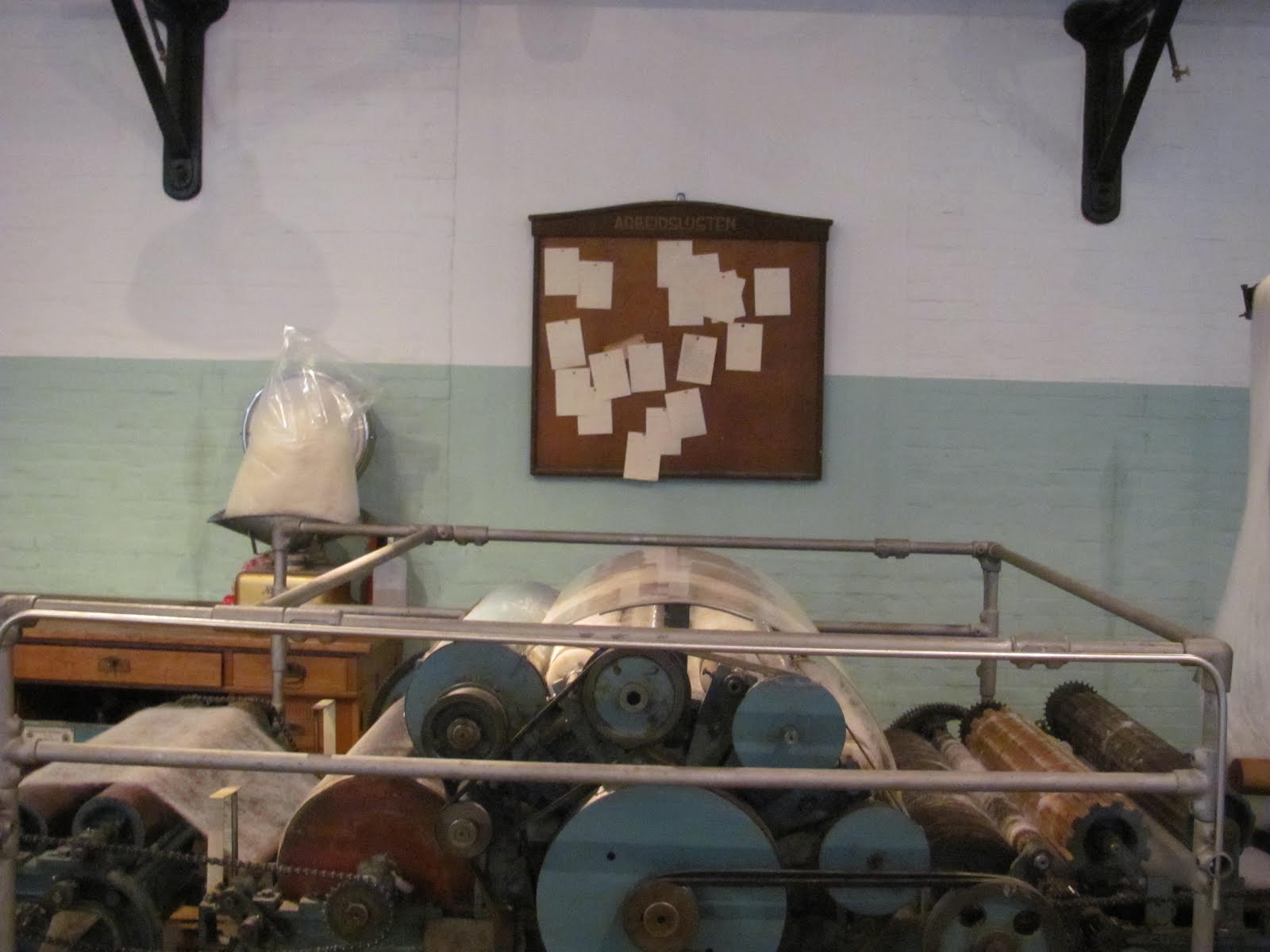
This was very apparent walking around the mill floor. Seeing the old looms that still work and tell the story of production then moving through the door and seeing the Textiel Lab in operation. New looms doing the same job as old. New designers working effectively with technicians to test ideas and create new work. Inspirational.

Digging in the library

textile samples
Fascination with labels


cloth and fibre samples


Something from Yorkshire

My first meeting

Textiel Museum, Tilburg.

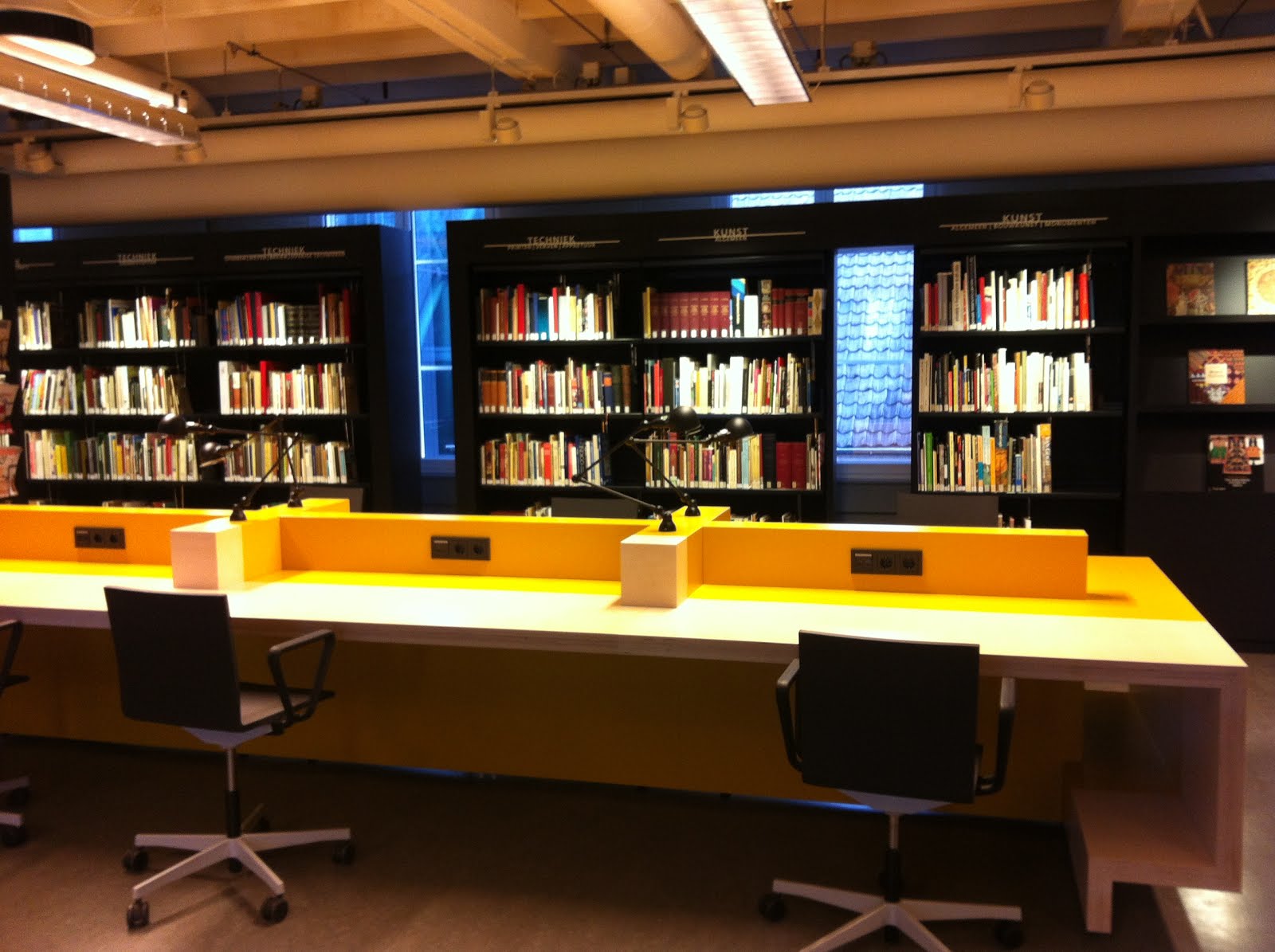
My first meeting was with Jantiene van Elk, who runs the library and graciously talked me through the collections and history of the museum and lab. The similarities to the textile regions of Yorkshire are great with many things that we could learn. An interesting point to note already is that what is often pivotal is having a visionary lead person who realises the importance of the provenance and history of the region. The museum was set up in 1958 as a way to capture the Woollen history of the town and region as the Chair of the Chamber of Commerce in the city saw its value. Initially it was housed in a former textile magnates villa, moving to its current location in 1986, which was the former mill of C Mommers & co one of the first mills to produce Buckskin in Tilburg.

Library/Bibliotech 2nd Floor Textiel Museum
Initial Research
Leeds Mill workers top - Tilburg mill workers below 
A great mission statement to take back to UK
Education drawers in the library
Textile samples

Day 1 Tilburg

Finding the Textiel Museum

One of my favourite parts of travel is meandering through a town or city and getting a sense of where I am and what that means. The wondering through streets like a flaneur following the traditions of Baudelaire and Benjamin. Aspiring to as really I had a destination to get to quickly.....
Walking for walking sake and not in a hurry to just get from one place to another, but to just experience/wondering in the urban cityscape, alley ways and hidden corners and nooks observing the immediate, and also to be seen.
mini library
interesting glass and tiles
Tilburg artisan cottages made me think of Hebden Bridge and the fustian making
My destination Textiel Museum Tilburg